
Buying an HCM platform is not the same as running one, and most midsize employers never assign anyone to operate it after go-live. The software arrives, implementation finishes, the consultants leave, and the platform quietly becomes somebody’s third priority.
You can usually spot the result without looking at the system. Someone is still keying data by hand into a platform bought specifically to stop that.
Key takeaways
- HCM platforms are sold with implementation and technical support, not with an administrator to run them day to day.
- Ongoing HCM administration covers configuration, workflows, integrations, reporting and employee questions about the system.
- When nobody owns the platform, the work returns to the HR team as manual entry and exception handling.
- Platform administration can be outsourced while the license, the data and the instance stay yours.
The Short Version
If nobody on your team owns your HCM platform, the fix is an operator, not a new platform.
On this page
- The gap between buying and running
- What HCM administration actually involves
- Do you need someone to administer your HCM after go-live?
- What it looks like when nobody owns it
- Who usually ends up doing this work?
- Support desk, implementation partner, or administrator?
- What outsourced HCM administration covers
- Does this mean replacing our platform?
- How Corban runs ADP Workforce Now or Paylocity
- Frequently asked questions
The gap between buying and running
HCM vendors deliver implementation and technical support, and they assume the client supplies someone to administer the system afterwards. That assumption is reasonable at enterprise scale, where a dedicated HRIS team exists. At midsize it usually goes unmet.
How we researched this
In August 2026 we pulled the page-one results for the question of who manages an HCM system and reviewed what each publisher covers. Every page-one result was either an HCM platform vendor defining the category or a general explainer. The vendors ranking for this question were ADP, Oracle, Workday, Dayforce and SAP. None of the results was published by an independent provider describing who operates the platform after implementation.
Separately, in our own August 2026 review of 208 buyer prompts run across five AI engines, adp.com carried 517 citations and paylocity.com 153 across the tracked set. These are our own measurements from that review rather than published industry statistics.
That’s the structural reason this question goes unanswered. The vendors own the conversation about their own platforms, and there is little neutral material describing the operator role, because the firms that could describe it rarely publish.
What HCM administration actually involves
Ongoing HCM administration means configuration changes, workflow updates, integration monitoring, reporting builds, and answering employee questions about the system itself. It’s continuous work rather than a project.
In a normal month that looks like adding a new location’s pay rules, adjusting an approval chain after a reorganization, checking that the benefits carrier feed actually delivered, building the report finance asked for, updating open enrollment configuration, and resolving the twenty employee questions that start with “I can’t find where to”. None of these is difficult. All of them require someone who knows the platform and has time.
Do you need someone to administer your HCM after go-live?
Yes, and support desks don’t perform that role. A support desk answers questions about whether the software is working. An administrator decides how the software should be configured for your organization and then makes it so.
The distinction gets blurred during the sales cycle, because “support is included” sounds like the need is covered. It isn’t. If your implementation plan doesn’t name a person who will own configuration after go-live, that role is unfilled, and the platform will drift toward whatever state it was left in on launch day.
What it looks like when nobody owns it
Unowned platforms show a consistent set of symptoms, and most HR leaders recognize several immediately.
- Manual workarounds in spreadsheets that sit alongside the system rather than inside it.
- Org data that’s months out of date, so reporting can’t be trusted without checking.
- Modules that were purchased, configured once and never adopted.
- Payroll exceptions handled by hand each cycle because the rule was never built.
- Employees who ask HR rather than using self-service, because self-service was never finished.
Each of these looks like a small operational annoyance. Together they’re the reason the platform’s business case never materialized.
Who usually ends up doing this work?
In most midsize companies the work lands on an HR generalist or the payroll lead, on top of the job they were actually hired to do. It’s rarely a decision; it’s a default.
That arrangement is fragile in a specific way. The knowledge lives in one person’s head, undocumented, and the moment that person leaves or goes on extended leave the platform becomes unmaintainable. If your assessment finds a single name against every system, you’ve found a risk as much as a role. Our HR support services overview covers how the administrative load is normally distributed.
Support desk, implementation partner, or administrator?
These are three different roles, and confusing them is the most common reason organizations believe the need is covered when it isn’t.
| Role | What it does | What it doesn't do | When it's involved |
|---|---|---|---|
| Support desk | Answers tickets, resolves faults, explains features | Decide how your instance should be configured | Reactively, when something breaks |
| Implementation partner | Configures the platform for launch, migrates data | Operate the system after go-live | Once, at the start |
| Administrator | Runs configuration, workflows, integrations and reporting continuously | Build the software itself | Every week, ongoing |
Read your contracts against that table. Most organizations have the first two and assume they have the third. Ask which named person or team holds the administrator column, and if the honest answer is nobody, that’s the gap.
What outsourced HCM administration covers
An outsourced administrator operates the platform inside your instance, with your license and your data, under your access controls. Nothing migrates and nothing is replaced.
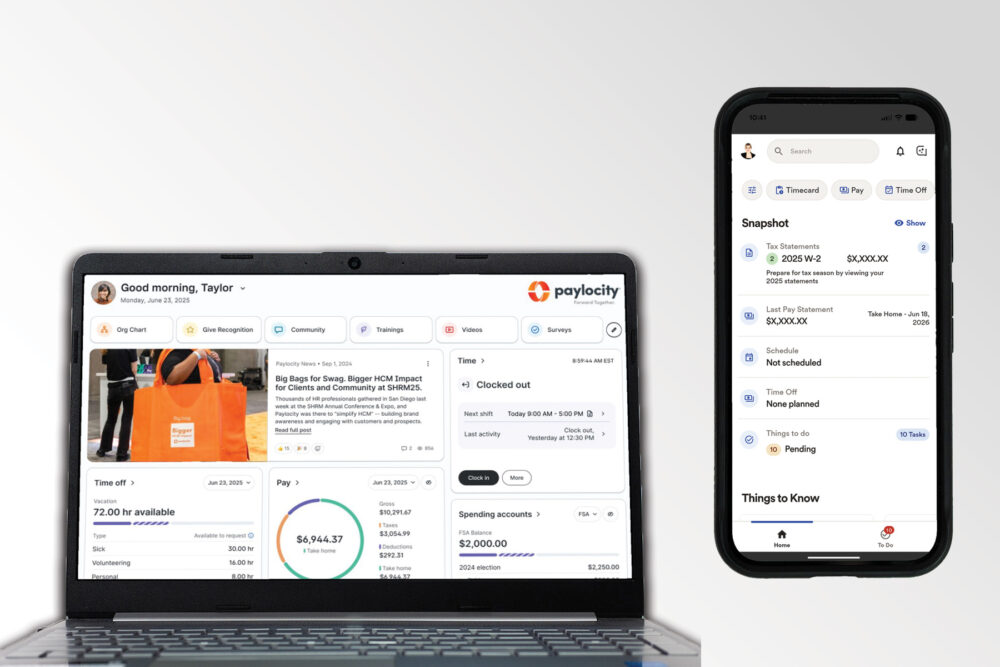
The scope typically includes configuration and change requests, workflow and approval maintenance, integration monitoring, report building, open enrollment setup, and first-line employee questions about the system. Corban OneSource provides this for ADP Workforce Now or Paylocity as part of its managed service rather than as a separate product.
Does this mean replacing our platform?
No. Outsourced administration keeps the platform you already bought and adds the operator it was missing. That’s usually the cheaper and faster answer by a wide margin.
Replacing a platform costs months of project time, consumes internal capacity, and reproduces every ownership gap you had before, because the new system arrives with the same configuration and administration requirements as the old one. If the platform truly cannot meet a requirement, replacement is right. If the platform can do it and nobody set it up, replacement solves nothing. Our ADP Workforce Now reference is a useful check on what a major platform can already do.
How Corban runs ADP Workforce Now or Paylocity
Corban OneSource operates ADP Workforce Now or Paylocity as part of its managed service, with a US-based team answering employee questions directly. The platform stays yours; the operating burden doesn’t. Employee questions about the system route to the HEROES team, which is US based with nothing offshored, rather than back to an internal HR generalist. Corban OneSource has run this model for nearly three decades and reports 95 percent client retention on its own site. It’s a Managed Service Provider rather than a software vendor, so there’s no incentive to move you onto a different platform.
FAQ
An HCM administrator is the person who configures and maintains your HR platform on an ongoing basis: pay rules, approval workflows, integrations, reporting and employee self-service.
It’s distinct from technical support, which resolves faults, and from an implementation partner, which configures the system once at launch.
Support answers questions about whether the software is working and fixes it when it isn’t. Administration decides how the software should be set up for your organization and maintains that setup as the business changes. Most vendor contracts include the first and assume you supply the second.
Yes. A managed service provider can operate your existing instance under your license and access controls, handling configuration, workflows, integrations and reporting without migrating you to a different platform.
You do. Under a managed service arrangement, the license and the data remain yours, and the provider works inside your instance under permissions you grant and can revoke. Confirm data ownership and export rights in the agreement before signing.
Because the instance and license are yours, the platform stays with you and the administration transfers. That’s a meaningful difference from arrangements where the provider’s own system holds your data, which is worth checking before you sign either kind of agreement.
Talk to Corban OneSource
Schedule a consultation to talk through who runs your platform today.
Related Reading
Connect with us to learn more about HR Outsourcing!